

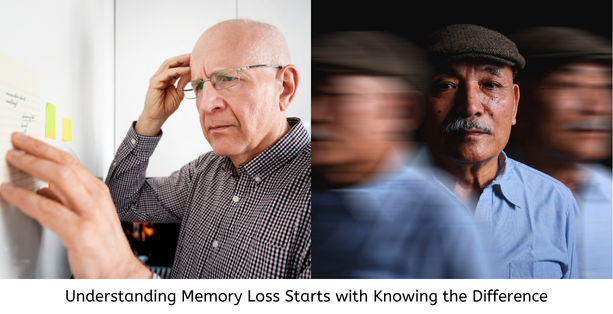
Many people use the terms Alzheimer’s and dementia interchangeably, but they are not the same. Understanding the difference between Alzheimer and dementia is important, especially if your loved one is experiencing memory loss, confusion, or behavioural changes. Getting clarity helps families seek timely evaluation and proper care.
At Manoguru Neuropsychiatry Clinic, our expert psychiatrist in Chandigarh and trained psychologist in Chandigarh offer accurate diagnosis and compassionate support for patients dealing with memory-related conditions.
What Is Dementia?
Dementia is not a disease—it is a general term used to describe a group of symptoms that affect memory, thinking, reasoning, and behaviour. It is an umbrella term for cognitive decline that interferes with daily life.
Common symptoms of dementia include:
- Memory loss
- Difficulty with language or communication
- Problems with reasoning and judgment
- Confusion about time, place, or people
- Personality or behaviour changes
Dementia can be caused by various diseases—and Alzheimer’s disease is the most common cause.
What Is Alzheimer’s Disease?
Alzheimer’s is a specific brain disease and the leading cause of dementia. It gradually damages the brain cells responsible for memory, thinking, and behaviour. Alzheimer’s is a progressive condition, meaning symptoms worsen over time.
Typical symptoms of Alzheimer’s include:
- Severe memory loss
- Repeating questions or stories
- Difficulty recognizing familiar people
- Misplacing items frequently
- Trouble completing daily tasks
- Changes in mood or personality
While dementia is a broad category, Alzheimer’s is one type within that category.
Difference Between Alzheimer and Dementia: Explained Simply
Here’s the simplest way to understand it:
| Dementia | Alzheimer’s |
| A general term describing a set of memory and thinking problems. | A specific disease that causes dementia. |
| Not a single disease—has multiple causes (Alzheimer’s, Parkinson’s, vascular dementia, etc.). | One cause under the dementia umbrella. |
| Symptoms vary depending on cause. | Symptoms follow a predictable pattern (progressive memory loss). |
| May be reversible in some cases (like vitamin deficiency, thyroid issues). | Not reversible; treatment manages symptoms but cannot cure it. |
| Can occur at any age depending on cause. | Mostly seen in older adults. |
Why Early Diagnosis Matters
Early detection allows:
- Better treatment planning
- Slowing the progression of symptoms
- Improved quality of life
- Support for caregivers
- Timely safety measures
At Manoguru Neuropsychiatry Clinic, our psychiatrist in Chandigarh and psychologist in Chandigarh conduct detailed memory assessments using globally accepted tools and clinical evaluation.
How Are These Conditions Diagnosed?
Diagnosis may involve:
- Cognitive and memory tests
- Neurological examination
- Mood and behaviour assessments
- Brain imaging (MRI/CT, if needed)
- Medical history evaluation
- Psychological testing
A combined approach ensures accurate identification of whether symptoms are due to Alzheimer’s, another type of dementia, or a reversible cause.
Treatment Options
While Alzheimer’s cannot be cured, early treatment helps slow progression. Dementia caused by certain conditions can be partially reversible.
Treatment may include:
- Medications to support memory and cognition
- Behavioural therapy
- Psychological counselling
- Lifestyle guidance (diet, sleep, physical activity)
- Family counselling
- Support for caregivers
At Manoguru Neuropsychiatry Clinic, we offer complete support for memory disorders with a team-based approach involving a psychiatrist in Chandigarh and psychologist in Chandigarh.
FAQs
No. Dementia is a general condition of cognitive decline, while Alzheimer’s is one specific disease causing dementia.
Some types may be reversible, but Alzheimer’s cannot be cured. However, treatment can improve quality of life.
If memory problems interfere with daily activities, consult a psychiatrist in Chandigarh for a detailed evaluation.
Diagnosis is usually made by a psychiatrist or neurologist. A psychologist in Chandigarh helps with cognitive testing and therapy support.
Final Thoughts
Understanding the difference between Alzheimer and dementia empowers families to take timely action. If you or a loved one is experiencing confusion, memory loss, or behavioural changes, early intervention is essential. At Manoguru Neuropsychiatry Clinic, our expert team provides comprehensive assessment, compassionate care, and long-term support for memory-related disorders.
Early diagnosis leads to better management—don’t delay getting help.